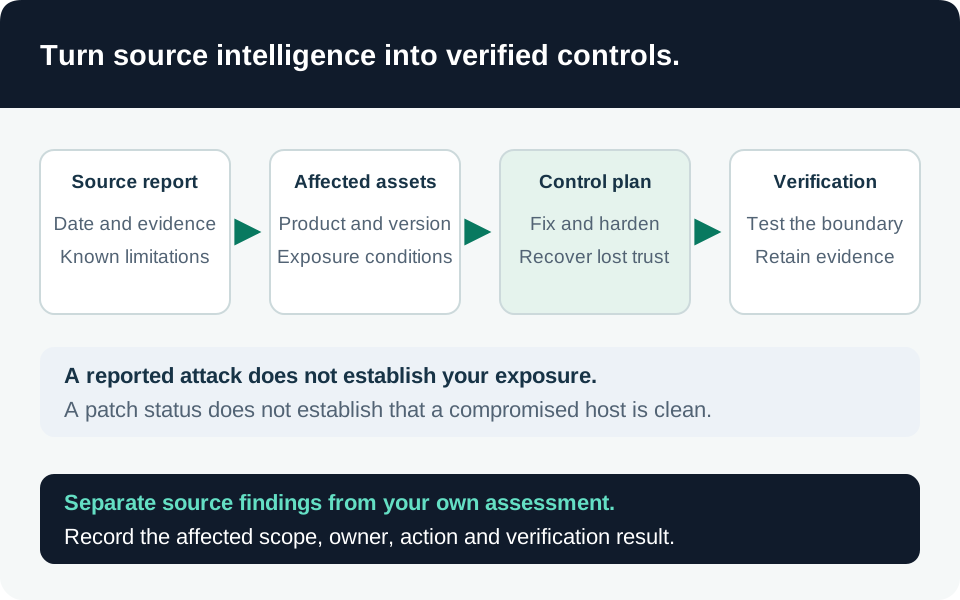
Follow one campaign, vulnerability or security issue from the source evidence to the Microsoft controls that matter. Establish exposure, investigate the signs, and verify the fix.
8Focused insights7CVE references11Product scopes
Latest documentation check
Dated evidence. Explicit scope. A hardening plan you can verify.
Explore the intelligence
Read the evidence in context.
Campaign and exploitation labels describe the cited report date. They do not mean an attack is ongoing today or that your environment is affected. Each dossier separates reported findings from hardening recommendations.
Understand the documented CLFS privilege-escalation chain, verify Windows remediation by product, and investigate the earlier foothold and later ransomware activity.
Separate Exchange hybrid application trust, remove obsolete shared credentials, and investigate on-premises compromise without mistaking sparse cloud logs for safety.
Investigate Microsoft Entra application authorization, distinguish delegated from app-only access, and close the re-consent path with verified recovery checks.
Scope the patched personal-account research correctly, reduce sensitive context, and rehearse evidence collection without claiming enterprise Copilot coverage.
Connect Microsoft reporting on Quick Assist abuse with Teams federation controls, enterprise support authorization, endpoint evidence and a tested containment process.
Use dated Microsoft campaign evidence to restrict device-code authentication, review device registration, and investigate token-backed access without assuming MFA alone stops the attack.