Engineer Sentinel correlations that survive real telemetry
Build defensible AI investigations with stable identity keys, explicit event grain, ingestion-aware scheduling, controlled joins and validated alert behavior.
Explore the topic
Design bounded hunts and analytics with explicit joins, identifiers, ingestion windows and validation cases.
Questions this collection helps you answer
Build your understanding
Build defensible AI investigations with stable identity keys, explicit event grain, ingestion-aware scheduling, controlled joins and validated alert behavior.
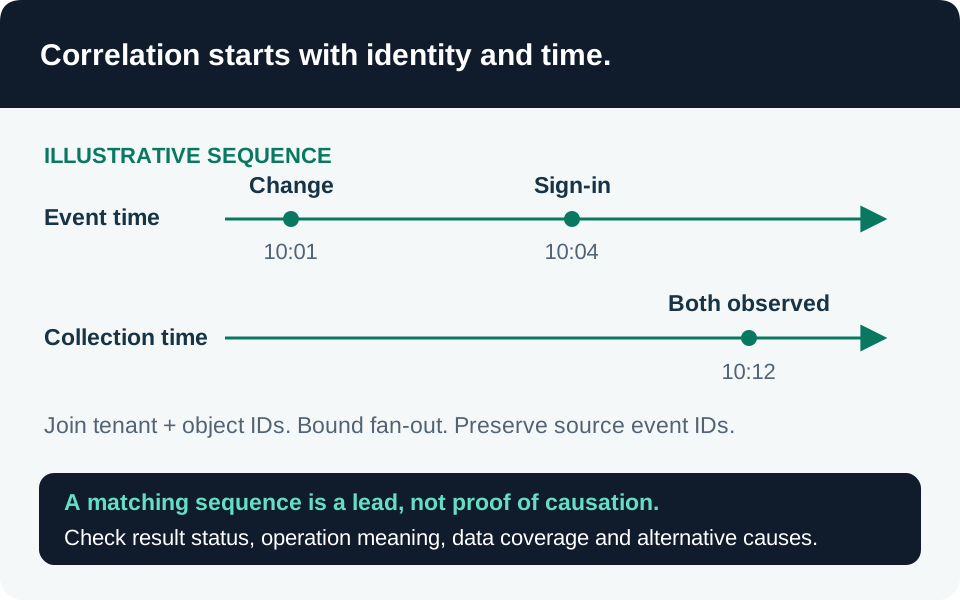
Test schema assumptions, event semantics, ingestion timing, join behavior, scheduling, entity mapping, and analyst outcomes before promoting a hunt into a detection.
Turn a suspicious AI interaction into scoped containment, preserved evidence, a defensible impact assessment, and verified recovery.
Move from control to evidence
Use these as investigation leads. Table coverage and context determine what the results can establish.
Find recent user/IP pairs absent from the preceding 14 days, requiring prior history for that user.
Join successful interactive sign-ins to preceding invalid-credential events for the same tenant, user and application within 30 minutes.
Require older successful history and no successful interactive events in the intervening 30-day window before flagging a recent return.
Find source IP and application windows with invalid-credential failures across many resolved users, preserving the distinction between spray candidates and shared egress.
Separate background delegated authentication failures by user, application, resource and reported error without confusing them with workload identities.
Inspect Entra sign-ins carrying medium or high risk while preserving outcome and remediation context.
Keep the latest observed record per provider-qualified alert identifier, rank declared severity and preserve event-time and entity-shape caveats.
Follow the connections