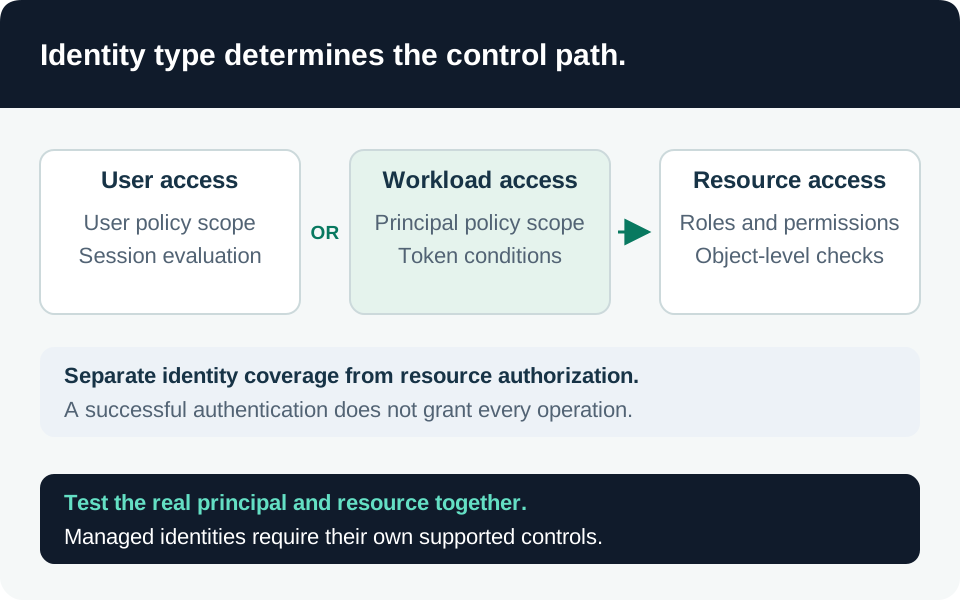
Identity & authorization5 min read
Advanced guideSeparate human, service-principal, managed-identity, and preview agent policy boundaries; validate token acquisition and resource enforcement independently.
Documentation checked↗
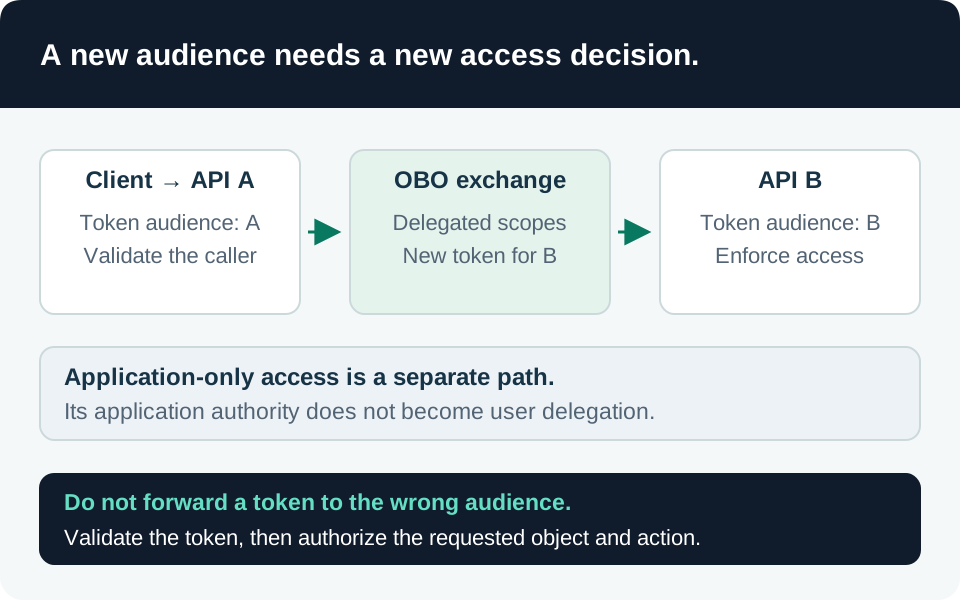
Identity & authorization7 min read
Advanced guideSeparate user delegation from application authority, validate token boundaries, and prevent an agent from turning an authorized session into an unauthorized action.
Documentation checked↗
Identity & authorization5 min read
Advanced guideDesign PIM activation, resource scope, approval evidence, and emergency recovery around the permissions that can change models, data, identities, and telemetry.
Documentation checked↗
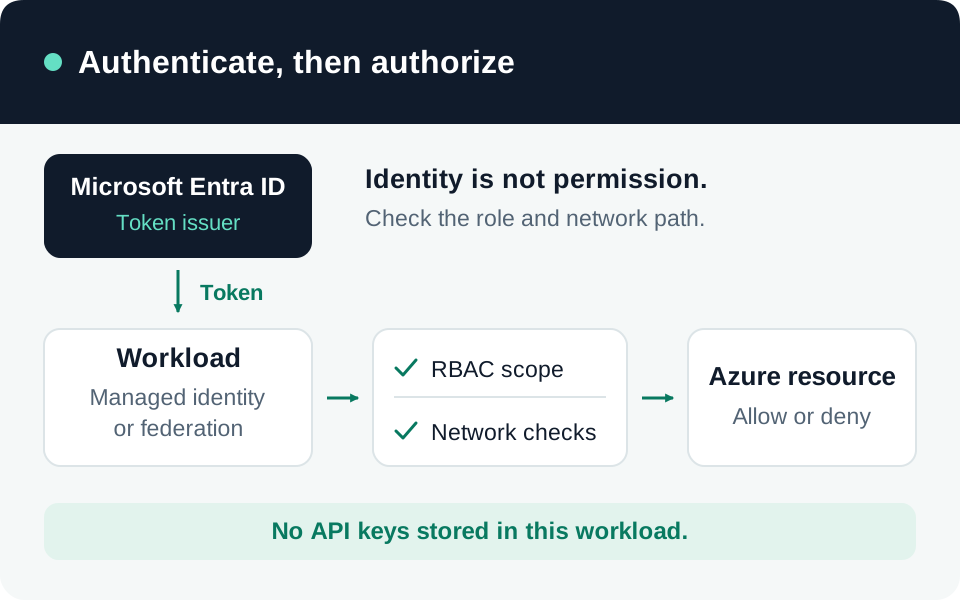
Identity & authorization7 min read
Advanced guideDesign issuer, subject, audience, and resource-permission boundaries so secretless deployment and runtime identities remain narrowly authorized.
Documentation checked↗
