Foundations4 min read
Build your Microsoft AI security baseline
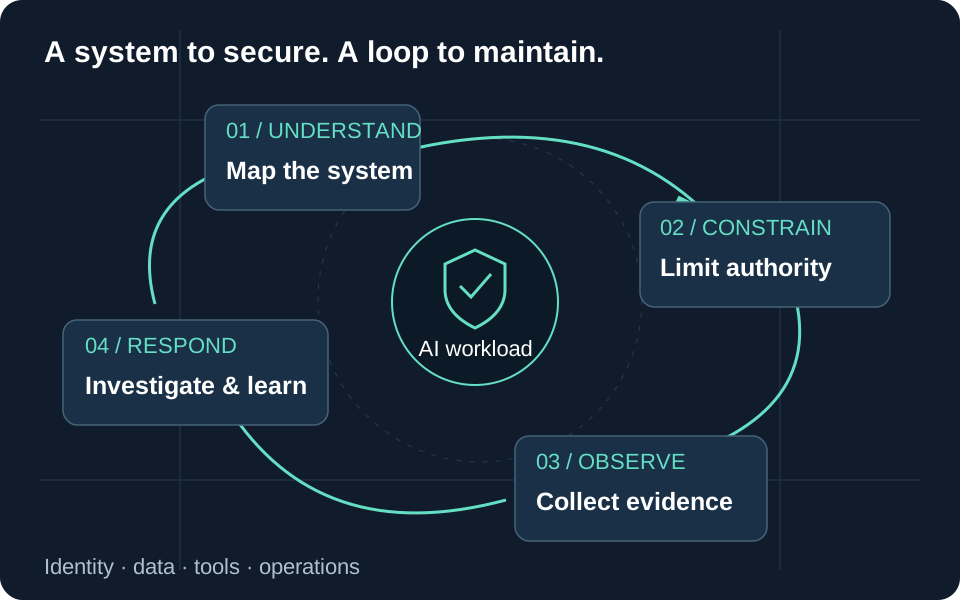
Build an evidence-based baseline for Microsoft AI: identify the workload, constrain data and actions, test boundaries, and prepare incident response.
Documentation checked
The knowledge base
Move from a product question to a control you can investigate. Explore a topic, follow a learning path, or search the full collection.
30 guides
2 guides
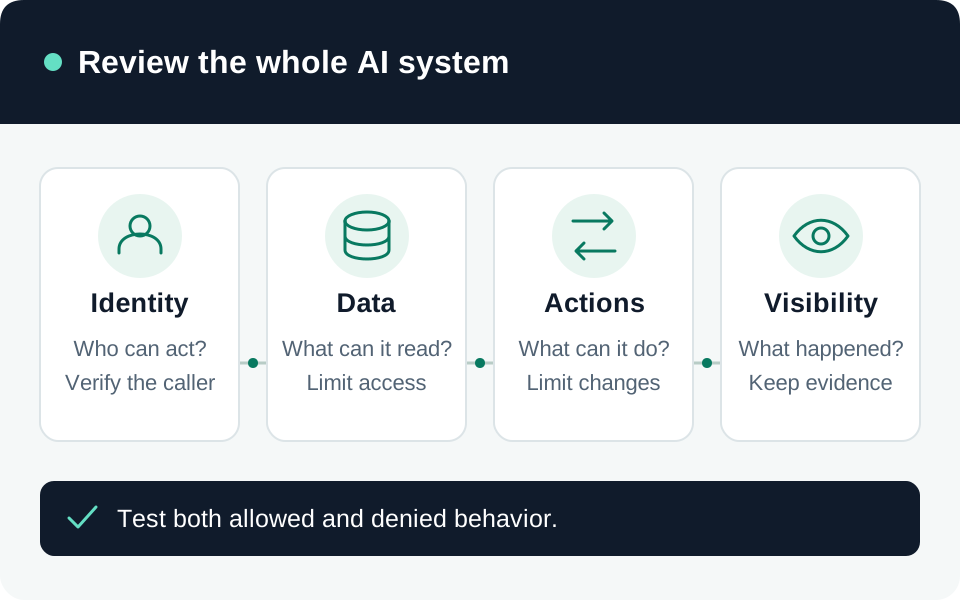
Map the system, establish the boundaries, and collect evidence that controls work.
Build an evidence-based baseline for Microsoft AI: identify the workload, constrain data and actions, test boundaries, and prepare incident response.
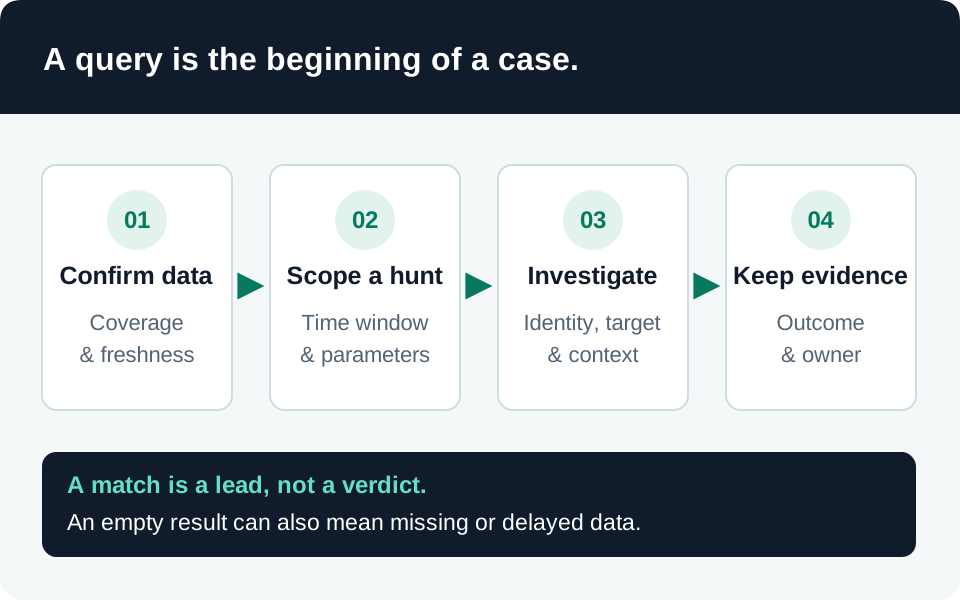
Map Microsoft AI events to their real destinations, verify ingestion with controlled activity, and define evidence before writing detections.
3 guides
Control oversharing, understand protection boundaries, and investigate organizational data use.
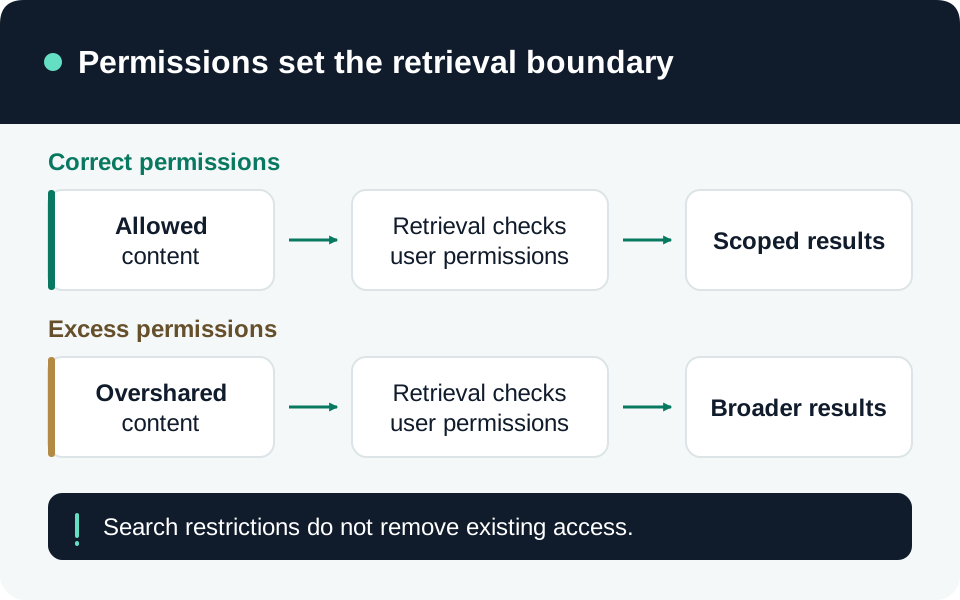
Prioritize exposed SharePoint content, assign accountable owners, remove unnecessary permissions, and verify access before closing findings.
Distinguish source permissions, label encryption, DLP processing restrictions, prompt controls, and investigation access using a workload-specific test matrix.
Separate Copilot permissions, discovery restrictions, encryption and DLP, then verify what users can retrieve, summarize and share.
6 guides
Design identity, networking, secrets and policy around the AI workload you actually run.
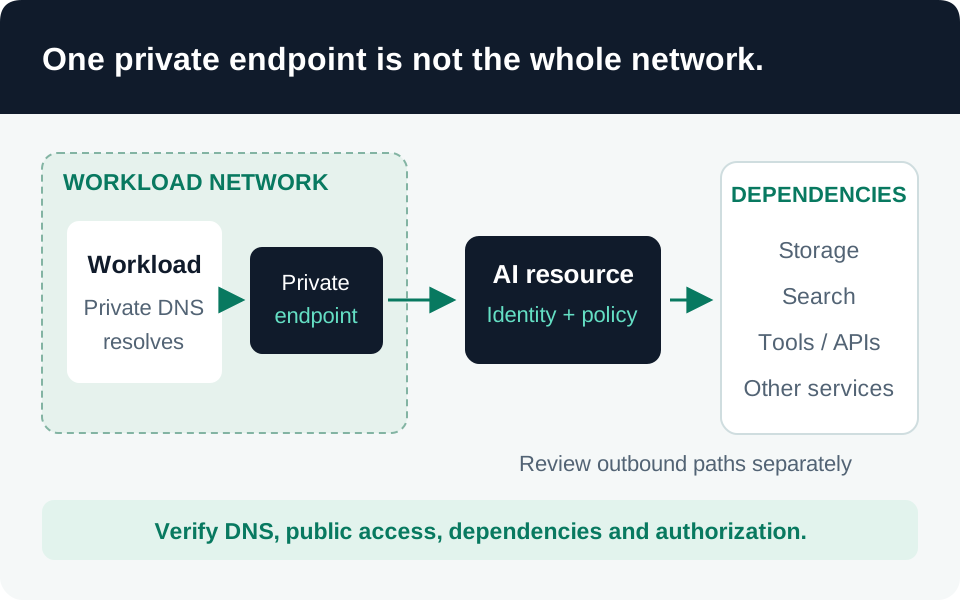
Trace inbound access, agent outbound traffic, hybrid DNS, and external tool destinations as independent controls, then test failure and recovery paths.
Separate caller authorization, backend identity, semantic-cache isolation, token budgets and private connectivity in Azure API Management.
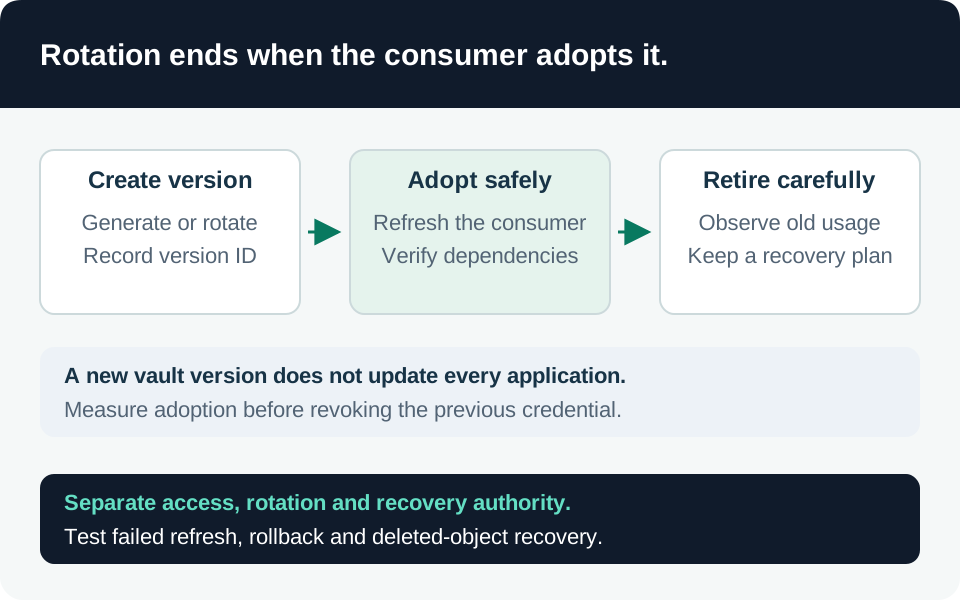
Separate secret replacement from cryptographic key rotation, verify consumer adoption, and recover vault dependencies without losing access to protected data.
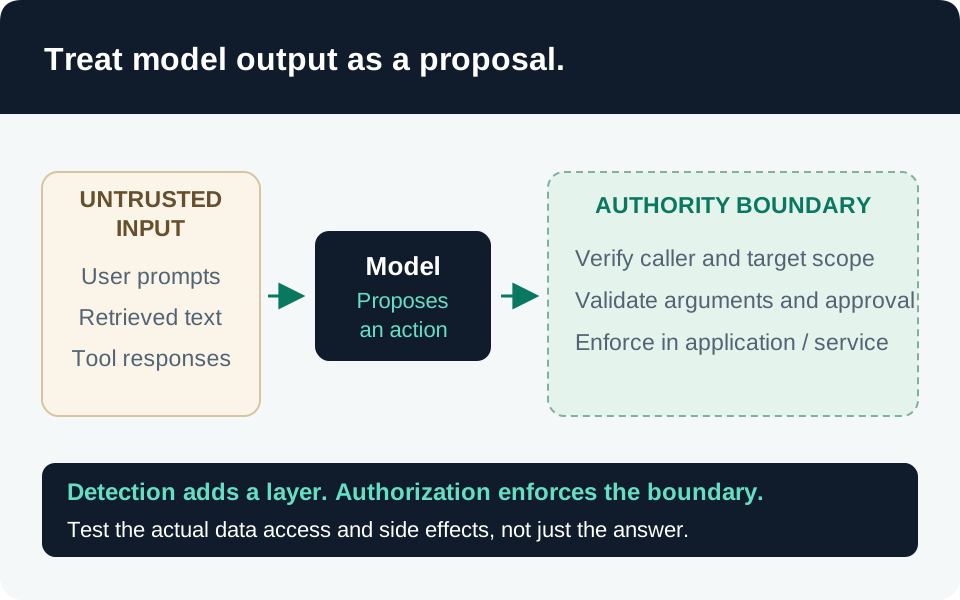
Combine Prompt Shields with deterministic authorization, controlled tool execution, and repeatable tests of retrieved content and tool responses.
Separate private inbound access, DNS, outbound dependencies, and identity checks before calling a Foundry deployment network-isolated.
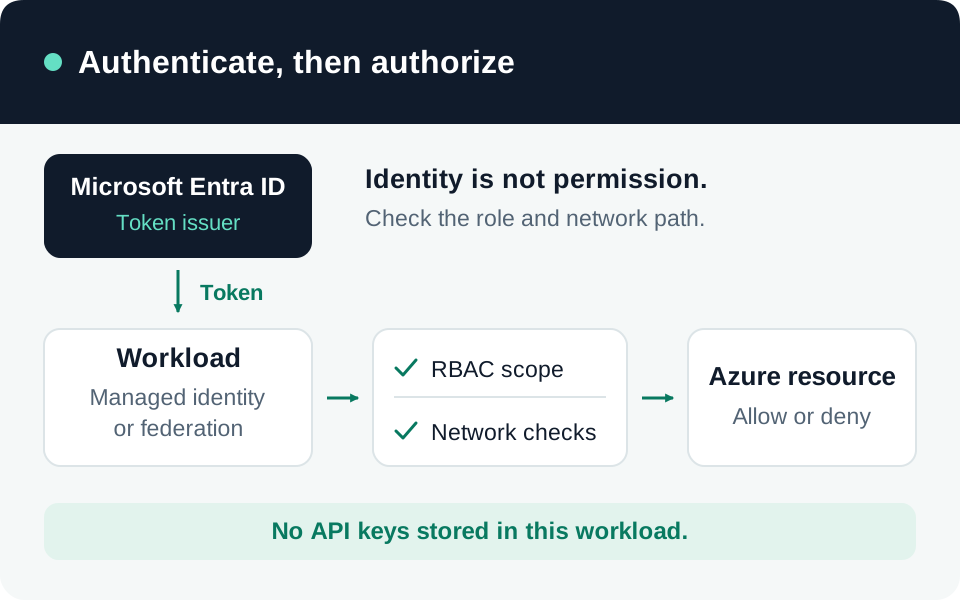
Choose the right Foundry identity and role, remove credential fallbacks, and test the boundaries of keyless access.
4 guides
Constrain connectors, tool authority and the consequential actions an agent can take.
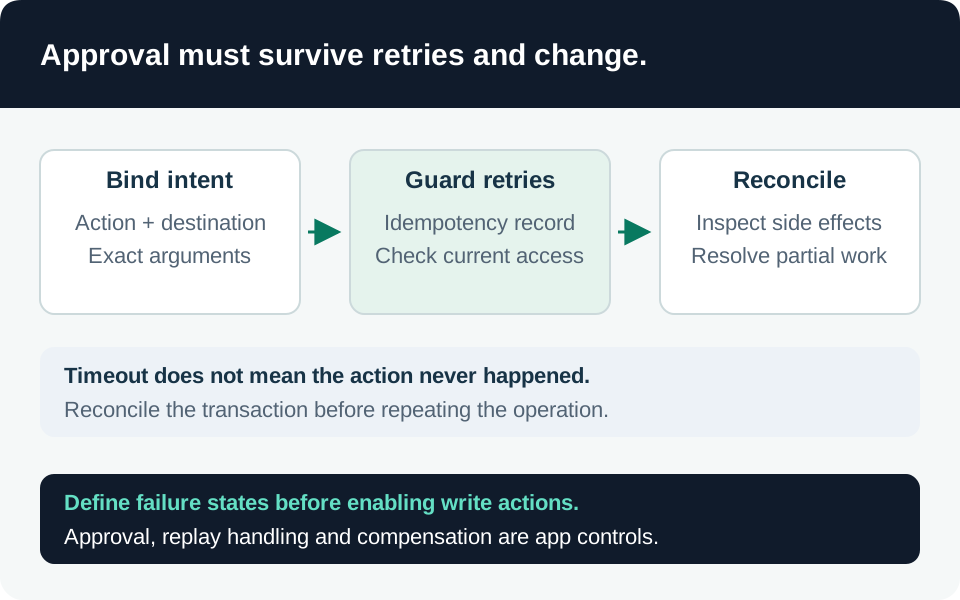
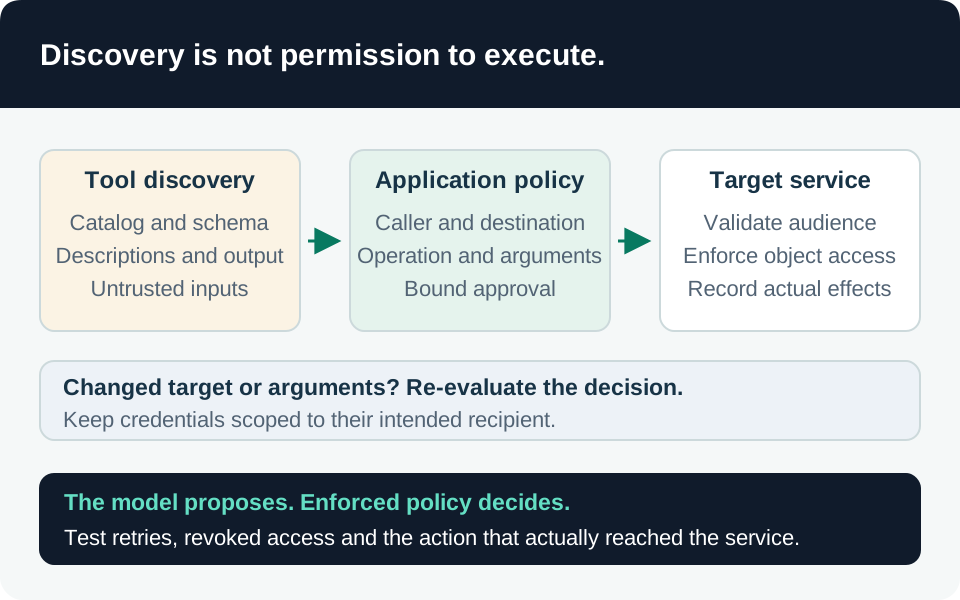
Bind approval to a concrete action, enforce authorization at execution, make retries idempotent, and recover multi-step workflows without inventing an exactly-once guarantee.
Turn a Copilot Studio connector inventory into scoped data policies, verified endpoint controls, and accountable changes across environments.
Design per-request authorization, tool admission, downstream identity and consequential-action approval for remote MCP integrations with Microsoft Foundry.
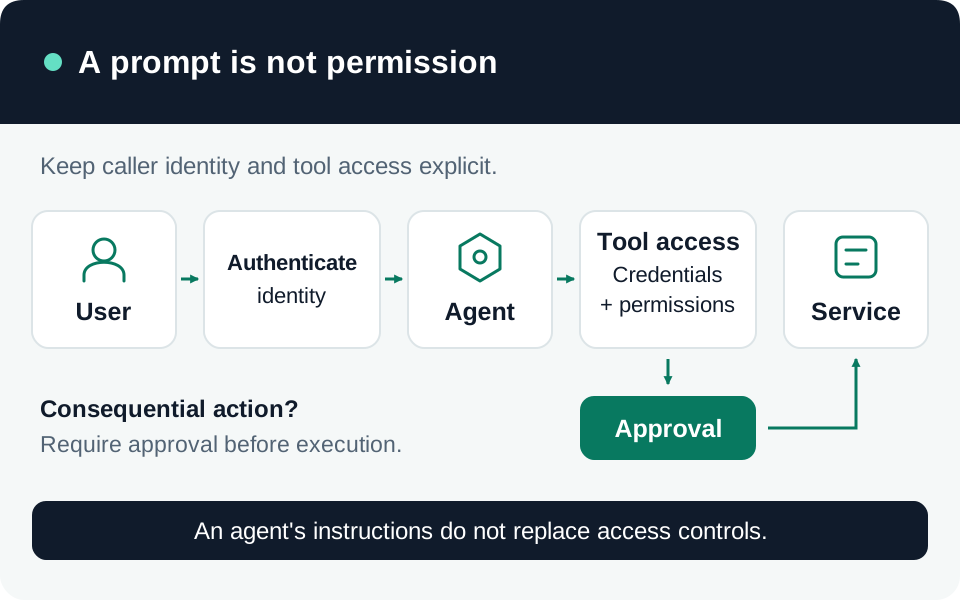
Separate agent sign-in from tool authority, constrain shared connections, and verify approval and denial paths.
5 guides
Build useful telemetry, investigate competing explanations, and contain the relevant authority.
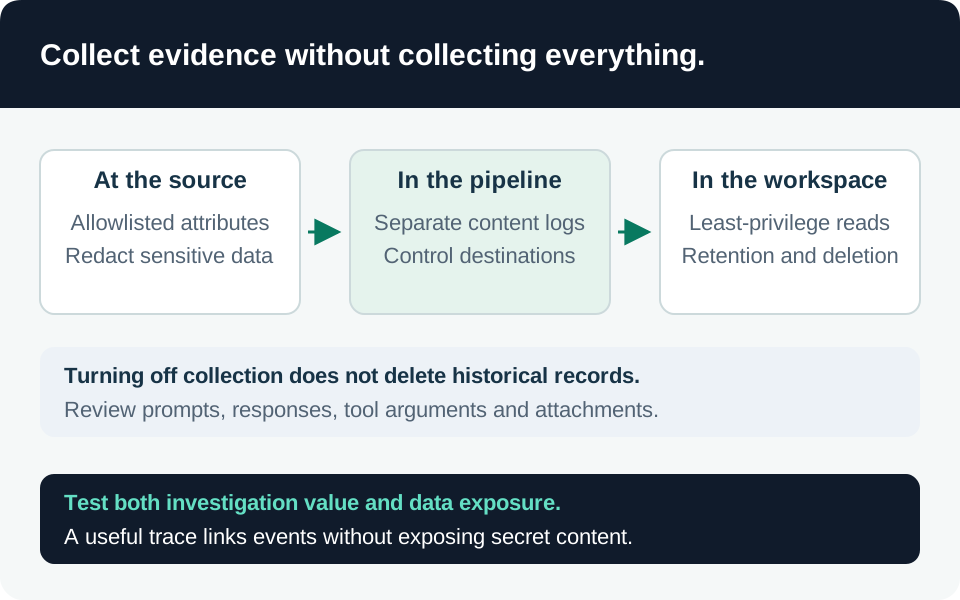
Design a telemetry contract that preserves authorization and action evidence, limits prompt capture, protects trace content, and tests leakage across logging paths.
Preserve the native record, discover the actual Copilot schema, and build an evidence-backed timeline without confusing metadata with conversation content.
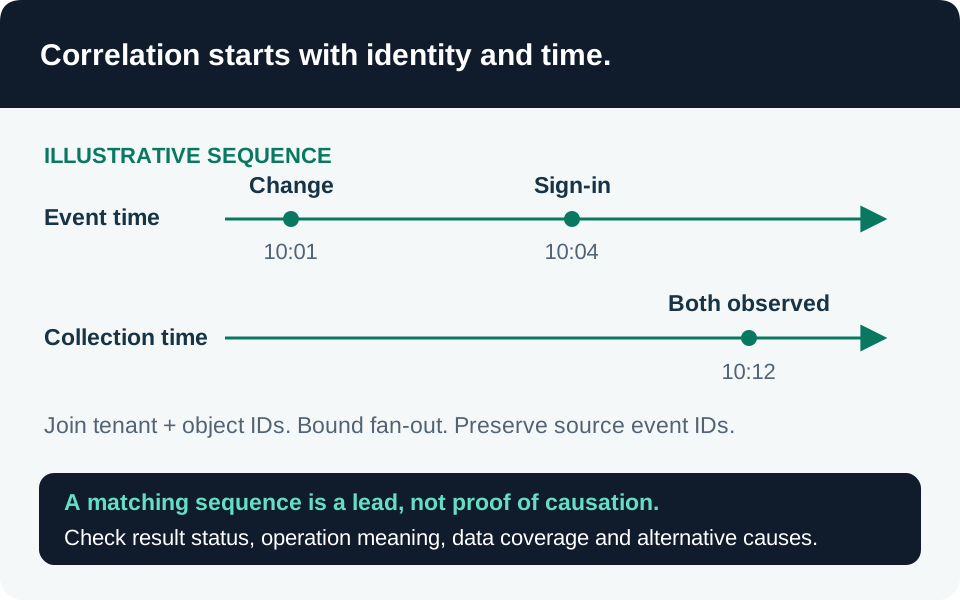
Build defensible AI investigations with stable identity keys, explicit event grain, ingestion-aware scheduling, controlled joins and validated alert behavior.
Test schema assumptions, event semantics, ingestion timing, join behavior, scheduling, entity mapping, and analyst outcomes before promoting a hunt into a detection.
Turn a suspicious AI interaction into scoped containment, preserved evidence, a defensible impact assessment, and verified recovery.
2 guides
Make release decisions with named owners, reproducible evidence and explicit exceptions.
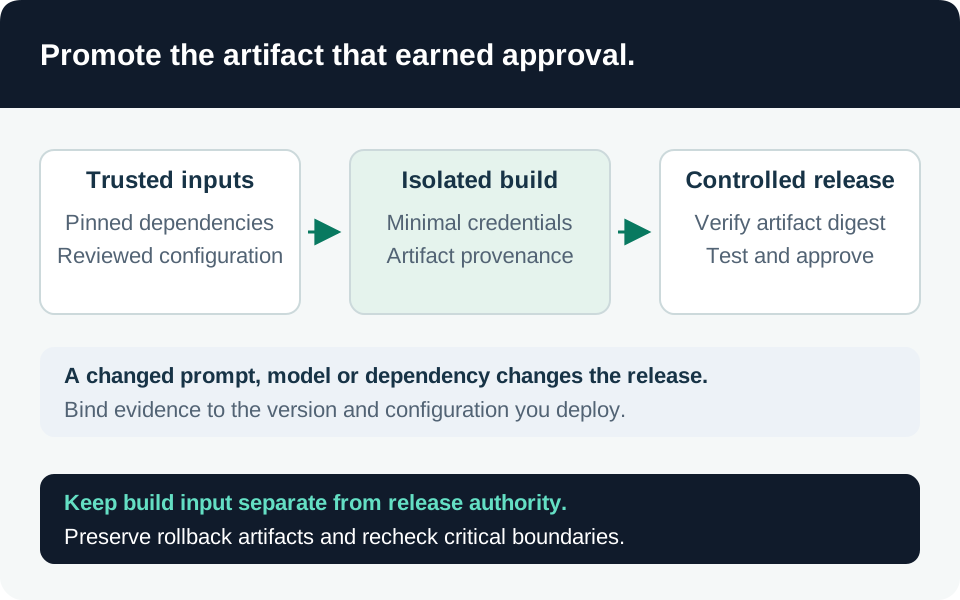
Version the model-facing release as a complete manifest, verify artifact identity and provenance, isolate deployment authority, and rehearse rollback without trusting mutable tags.
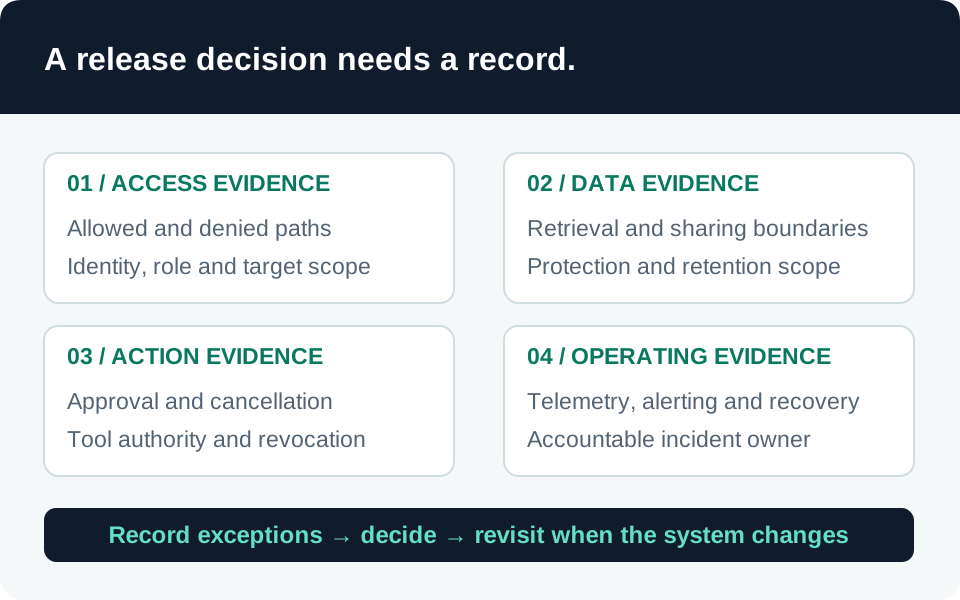
Tie each release to its identities, tools, data sources, test evidence, deployment settings, and recovery decision before expanding access.
4 guides
Trace delegated authority, token audiences, privileged access and federation trust.
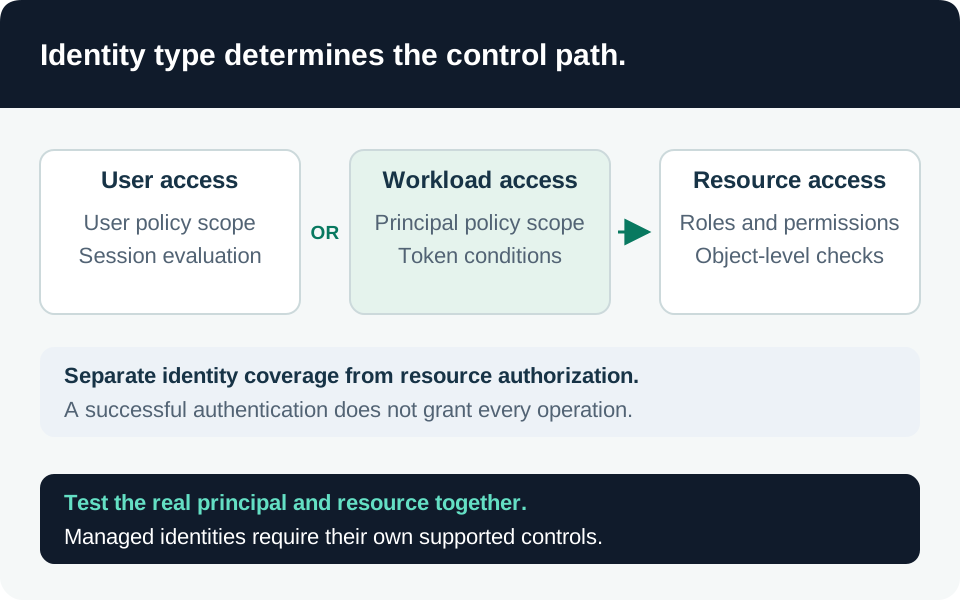
Separate human, service-principal, managed-identity, and preview agent policy boundaries; validate token acquisition and resource enforcement independently.
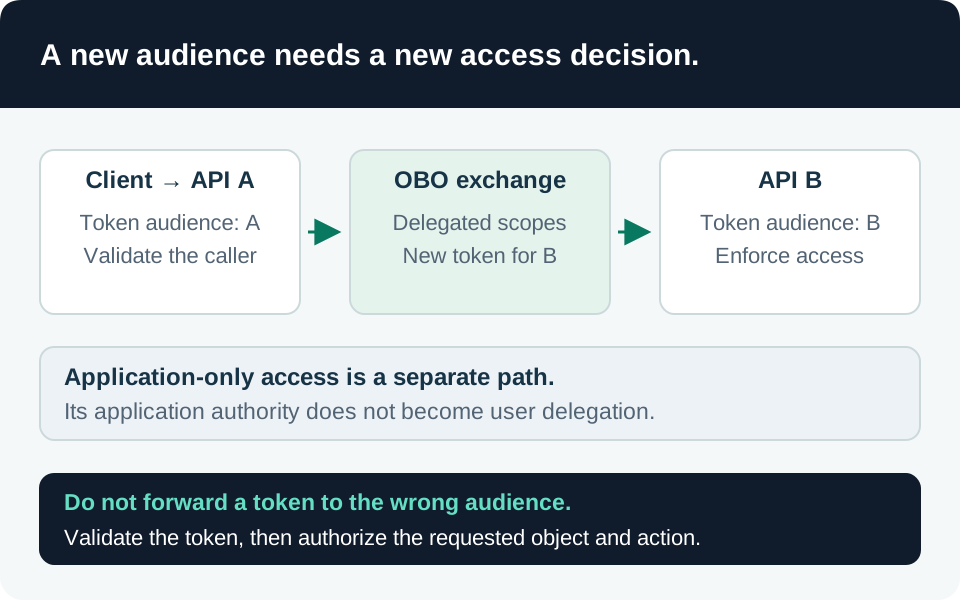
Separate user delegation from application authority, validate token boundaries, and prevent an agent from turning an authorized session into an unauthorized action.
Design PIM activation, resource scope, approval evidence, and emergency recovery around the permissions that can change models, data, identities, and telemetry.
Design issuer, subject, audience, and resource-permission boundaries so secretless deployment and runtime identities remain narrowly authorized.
3 guides
Protect document permissions, ingestion integrity and the storage behind AI grounding.
Separate ingestion and serving authority, close Shared Key and anonymous paths, constrain SAS use, and validate Blob and Data Lake access independently.
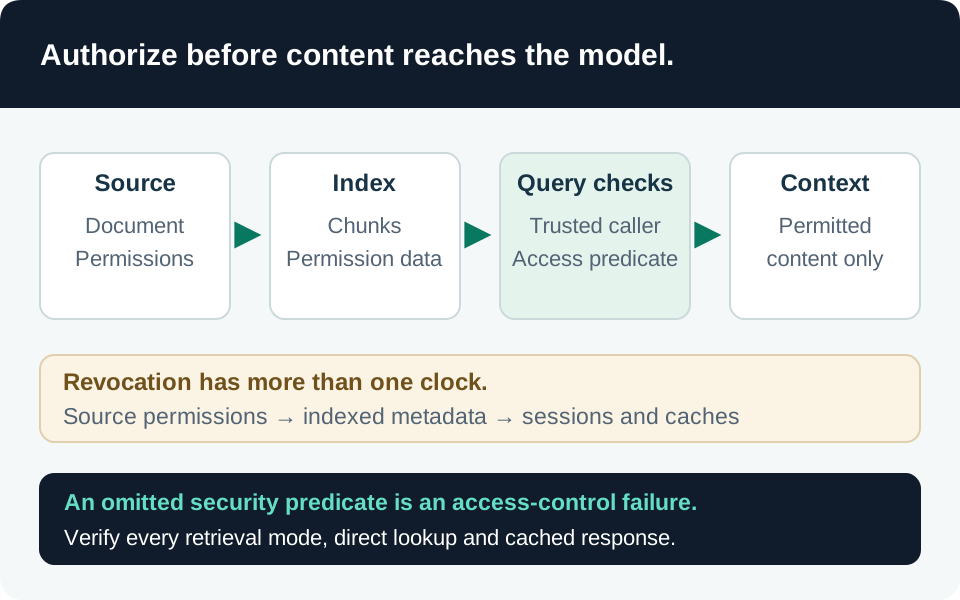
Choose between application security filters and native preview permissions, preserve access metadata on chunks, and enforce the same boundary across keyword and vector retrieval.
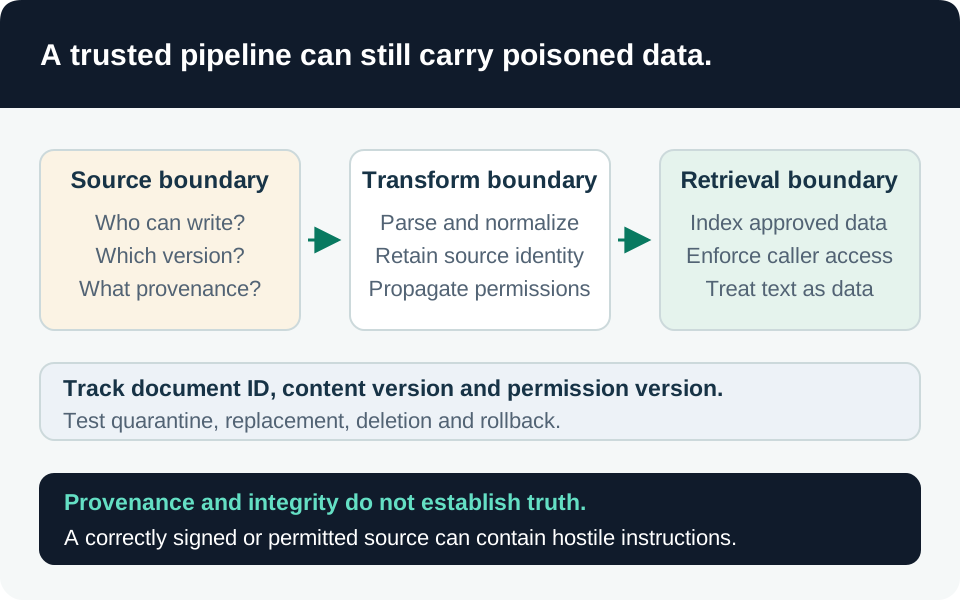
Separate source access from content trust, preserve provenance through chunking, and verify publication, deletion, and rollback without assuming a prompt filter proves integrity.
1 guide
Design threat-led experiments, inspect real side effects and interpret evaluation limits.
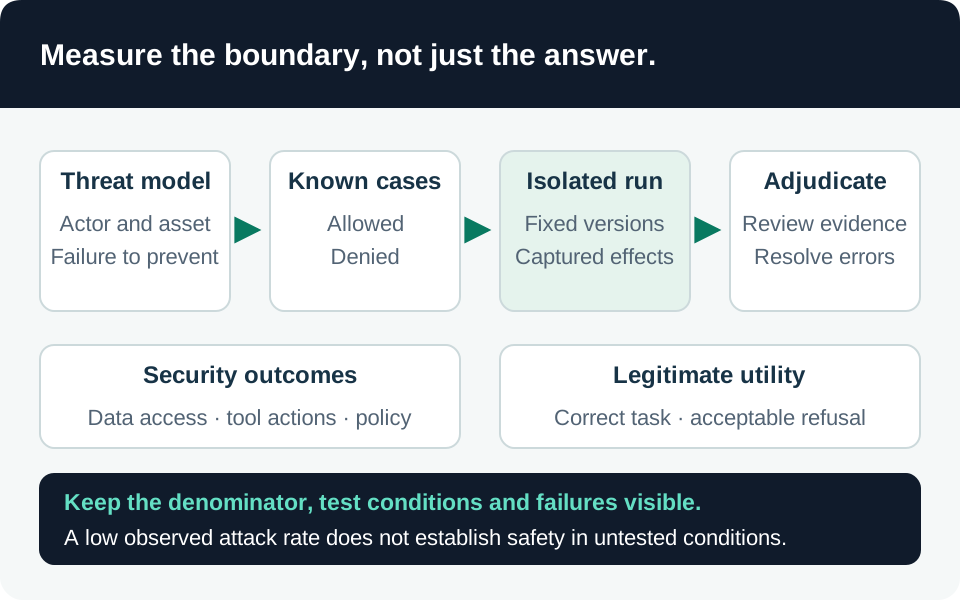
Turn a threat model into repeatable Foundry adversarial tests, calibrate AI graders, protect evaluation data and define honest release criteria.
Try a broader term or select a different track.